17 June 2026 – EULIAA IR lidar measures first Noctilucent Cloud (NLC)
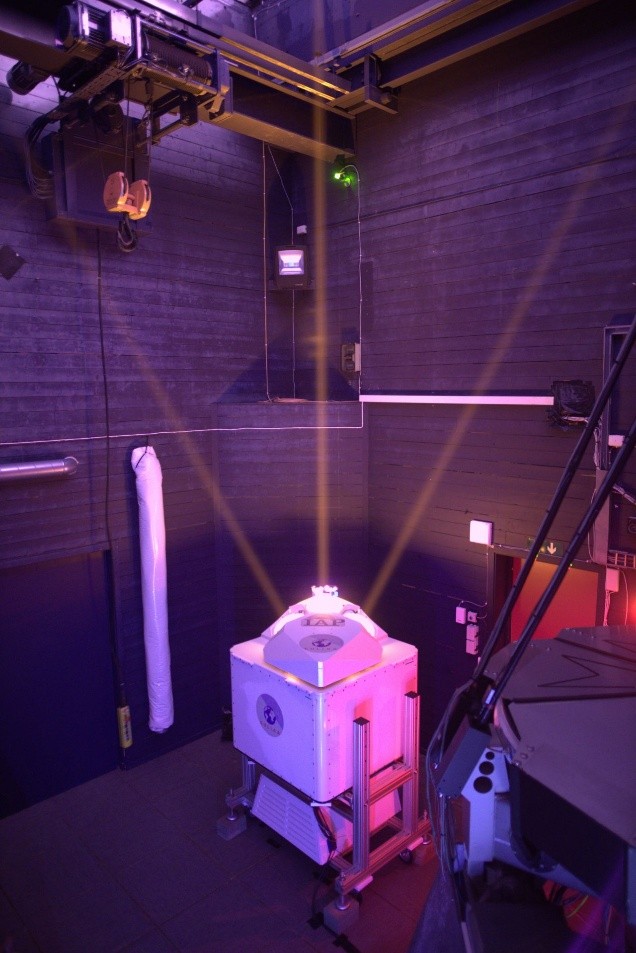
Our first EULIAA lidar, operating at Andøya Space since more than half a year, caught something new:
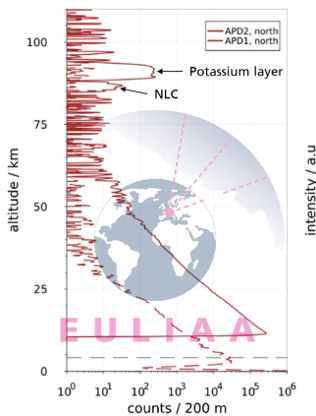
With the now starting season, the lidar measured its first Noctilucent Cloud (NLC), also called Polar Mesospheric Cloud (PMC), in altitude of 80-90 km. As the name suggests, they usually only appear in polar regions but with the increasing climate change they can be seen in more southern latitudes. So, they can be a potential tracer for monitoring of the climate change if the understanding of their formation and the necessary conditions improves. Our EULIAA lidars can contribute with its data from otherwise inaccessible altitudes.
10 June 2026 – EULIAA IR lidar tracks rocket emissions at ESA symposium
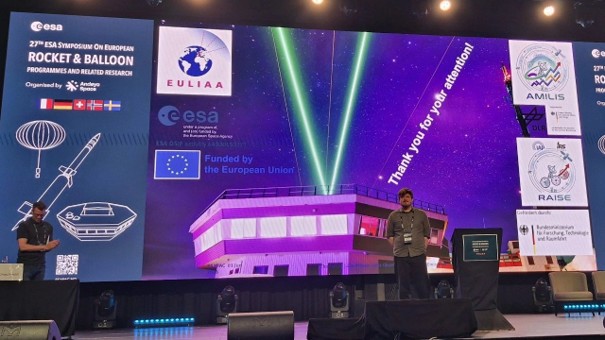
At the ESA Symposium on European Rocket and Balloon Programmes and Related Research in Trondheim, Thorben H. Lüke‑Mense (Leibniz Institute of Atmospheric Physics, IAP) presented first results from the EULIAA infrared lidar at the ALOMAR observatory in Northern Norway.
The system, operating autonomously at Andøya Space since October 2025, successfully measured aerosols from a sounding rocket exhaust throughout the atmosphere during launch.
These measurements, although not the primary project objective, demonstrate the strong potential of EULIAA lidar technology for monitoring spaceflight emissions and have already triggered discussions with stakeholders from the space transportation community.
10 June 2026 – Preparations for Jungfraujoch high‑altitude UV‑lidar campaign
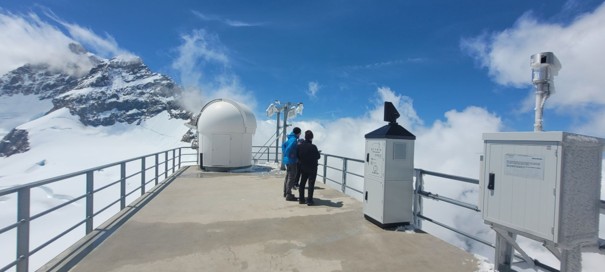
The next major campaign for EULIAA’s atmospheric lidar is scheduled to start in early July 2026 at the Sphinx Observatory on Jungfraujoch (3,571 m a.s.l.) in Switzerland.
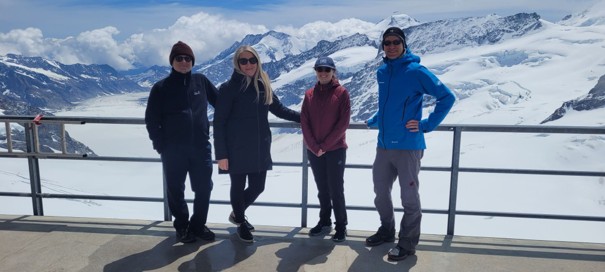
Partners from MeteoSwiss, IAP and Fraunhofer ILT visited the site to plan logistics, access and installation on the Meteo Terrace, where the second UV lidar will operate for about three months under extreme conditions (hoarfrost, snow, wind gusts up to 250 km/h and very low temperatures).
Demonstrating fully autonomous operation at this remote, high‑altitude station will be an important proof of the high technological readiness level (TRL) of the EULIAA lidar systems and a step towards future dual‑site measurements (e.g. MeteoSwiss Payerne + Jungfraujoch) as a first lidar array.
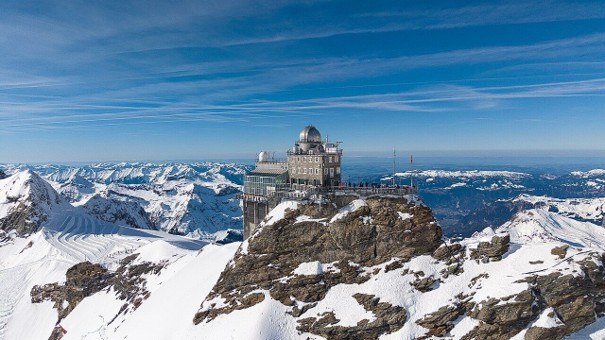
Sphinx-Observatorium (45901) – Jungfraujoch – Wikipedia
.jpg)
6 May 2026 – EULIAA at EGU2026: Townhall TM6 and project results
At EGU2026 in Vienna, EULIAA partners were active throughout the week:
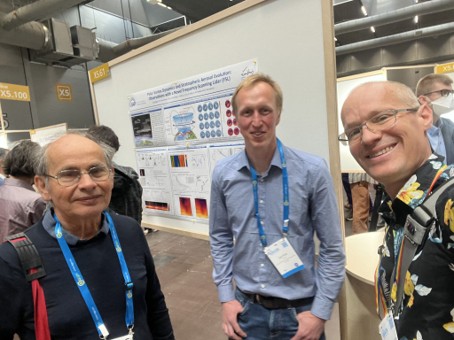
- On the first conference day, several posters presented results from lidar development, deployment and data management, which attracted considerable interest from the geoscience community.
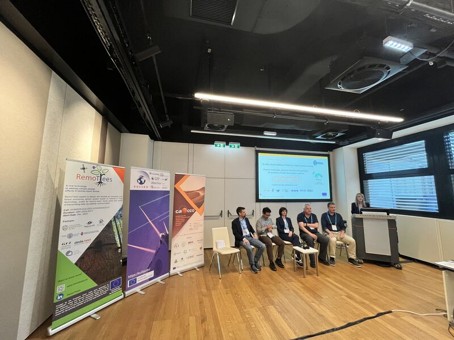
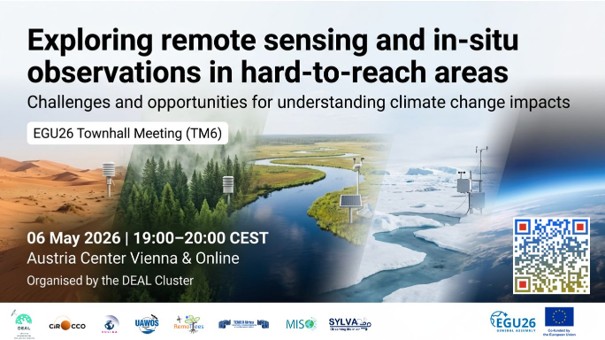
- EULIAA then co‑organised Townhall TM6 “Exploring remote sensing and in‑situ observations in hard‑to‑reach areas: Challenges and opportunities for understanding climate change impacts”, together with the DEAL cluster and projects such as CiROCCO, UAWOS, TEMBO Africa, MISO, SYLVAN and RemoTrees.
- During the Townhall, EULIAA highlighted two complementary aspects of “hard‑to‑reach environments”:
- harsh deployment sites for ground‑based lidars (Northern Norway, Southern France, high‑altitude mountain stations), and
- measurements of wind, aerosols and temperature up to 50 km and above, in altitude regions that are otherwise inaccessible.
The discussions showed that many groups – using very different instruments – face similar challenges and are willing to share best practices. EULIAA thanks CiROCCO for leading the organisation and Chrysoula Papathanasiou for moderating the event.
30 April 2026 – Second Periodic Review Meeting at IAP
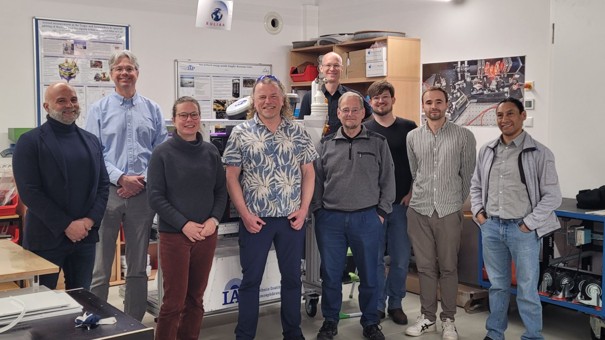
The second Periodic Review Meeting of the EULIAA project took place at the premises of the Leibniz Institute of Atmospheric Physics (IAP).
The consortium presented the progress achieved in the first three project years, including the deployment of the first two atmospheric lidars to Northern Norway and Southern France and preparations for a third system to be deployed in Switzerland.
EULIAA partners thanked Advisory Board members Jens Löhring (ESA) and Magnus Lindskog (ECMWF), the reviewers Peter North and Simone Lolli, and project officer Lara Congiu for their constructive feedback for the final project phase.
30 April 2026 – Political delegation visits EULIAA lidar at Andøya Space
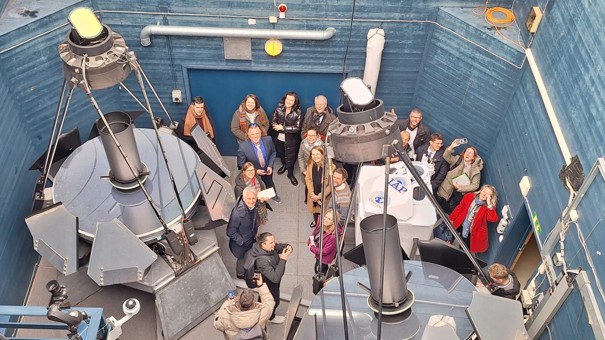
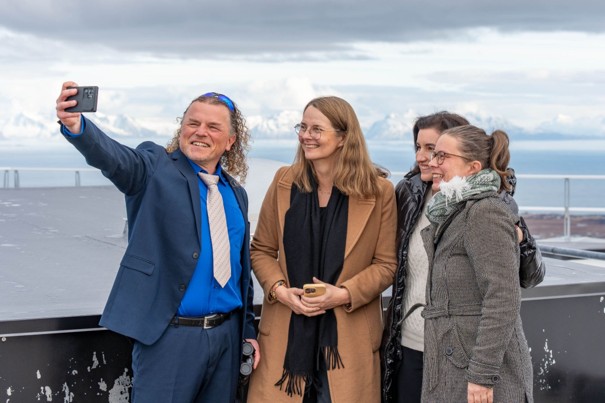
A high‑level delegation comprising German federal and state Ministers for Research, Technology and Space, together with Norway’s Minister for Trade, visited Andøya Space and the ALOMAR observatory.
During the visit, IAP and Andøya Space presented the EULIAA atmospheric lidar and its unique capabilities for upper‑atmosphere wind and aerosol measurements.
The visit underlined the importance of long‑term scientific infrastructure and international collaboration for atmospheric and space‑related research, and the need for political support to realise a future European lidar network.
22 April 2026 – First UV lidar deployed to Observatoire de Haute‑Provence
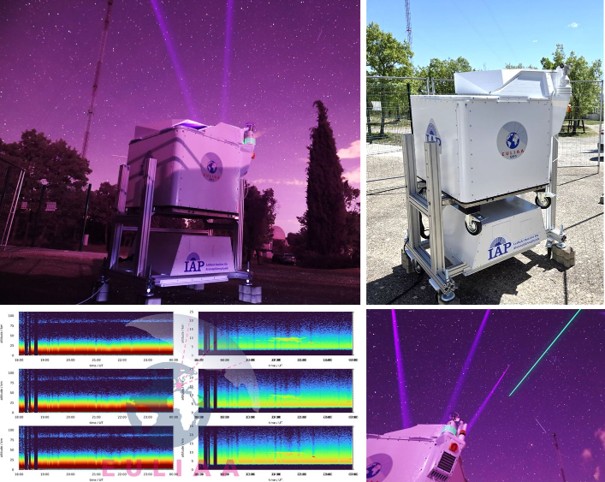
The first UV lidar developed in EULIAA has been successfully deployed to the Observatoire de Haute‑Provence (OHP) in Southern France.
After only a few weeks of test runs at IAP, the system was transported by truck and achieved first atmospheric measurements on the evening of arrival—without any realignment—demonstrating excellent robustness.
The UV lidar now provides continuous measurements up to about 100 km altitude, including the iron layer around 80 km, operating autonomously (weather permitting) and showcasing new solutions for full‑daylight capability; Altechna contributed high‑damage‑resistance UV optics and filters and advanced telescope optics to this milestone.
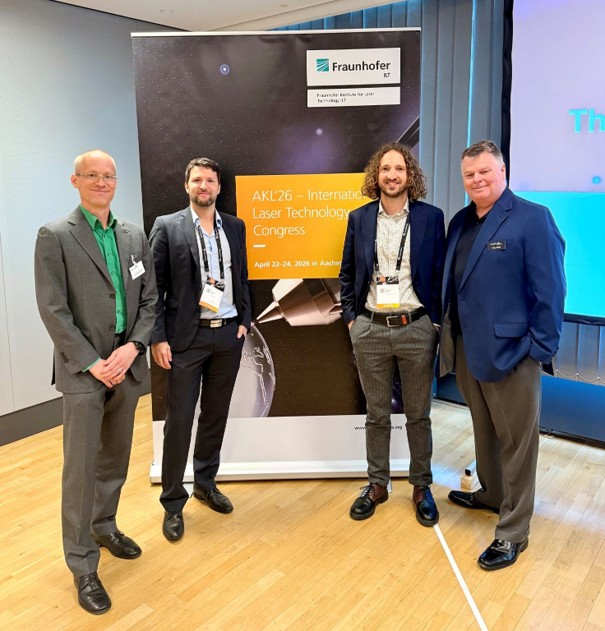
24 April 2026 – Alexandrite laser technology presented at AKL Congress
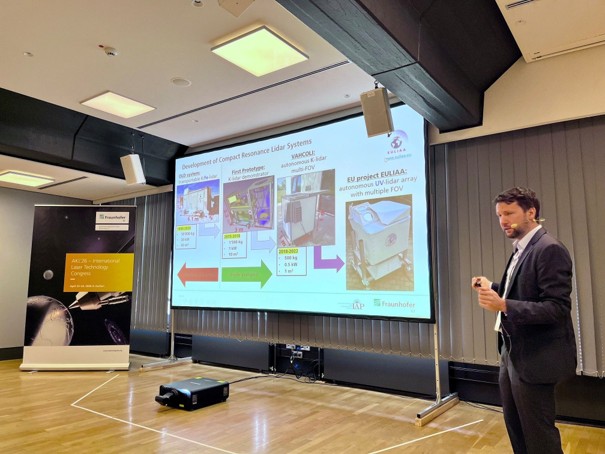
At the AKL – International Laser Technology Congress in Aachen, EULIAA technology was featured prominently:
- Fraunhofer ILT presented the Alexandrite laser developed for EULIAA to a broad audience from laser science and industry, showing how the tailored, narrow‑band sources enable advanced atmospheric lidar in both infrared and ultraviolet.
- In addition, Michael Strotkamp (Fraunhofer ILT) served as session chair for “Lasers with Tailored Wavelengths”, with talks by Alexander Munk (diode‑pumped Alexandrite lasers for atmospheric lidars), Konstantin Holzner (monochromatic visible lasers for astronomy and quantum technologies) and Toby Strite (nanosecond DUV laser alternatives for micromachining).
The session underscored how wavelength‑customised laser sources not only improve existing processes but also enable entirely new applications, including atmospheric research, astronomy and advanced material processing.
17 April 2026 – EULIAA lidar array concept at ESA AEOLUS CalVal Conference
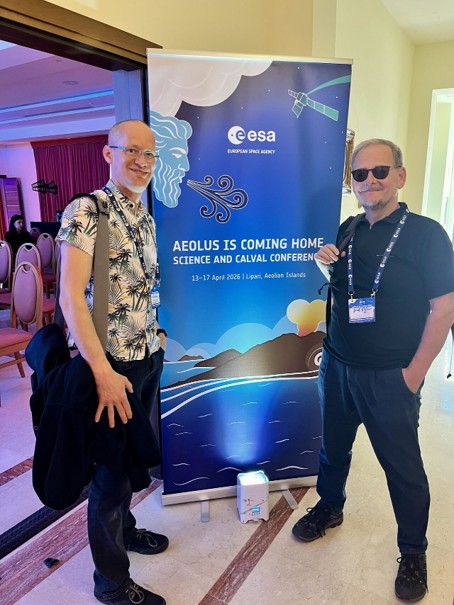
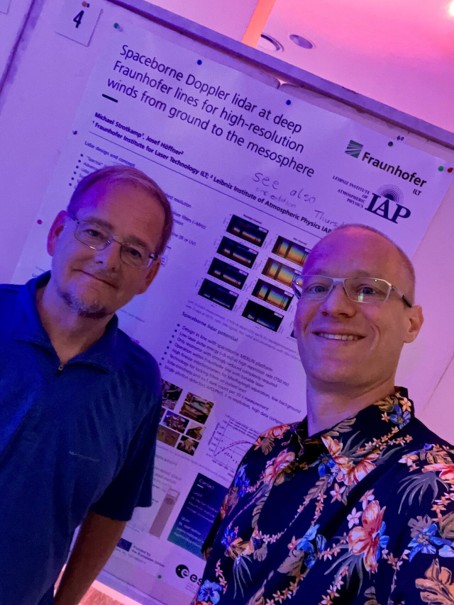
At the ESA AEOLUS CalVal and Science Conference on Lipari, EULIAA partners presented the concept of mobile atmospheric lidar units that can be combined into a lidar array.
Such arrays significantly increase spatial overlap with fast‑moving satellites compared to single instruments, making them ideal for calibration and validation of spaceborne wind and aerosol lidars.
The superior performance and extended altitude range of the EULIAA systems also make them promising candidates for future space missions.
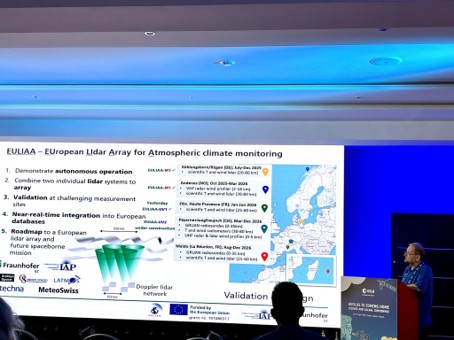
15 April 2026 – Video on 3D‑printed lidar platforms released
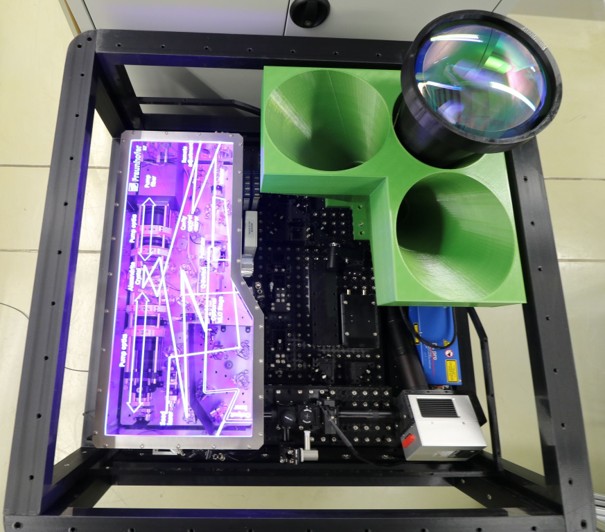
A new video produced by BigRep showcases how EULIAA lidar platforms are built using large‑format 3D‑printed structural components.
Most mechanical parts are printed by IAP from carbon‑fibre reinforced plastics, providing sufficient strength at low cost and enabling fast design optimisation cycles.
With the first lidar having operated for half a year at Andøya Space under Arctic conditions, the video demonstrates that the 3D‑printed platforms are rugged enough for harsh environments up to 100 km measurement range.
Lasers at the Edge of Space: Building a 3D Printed LiDAR Observatory
27 March 2026 – Four months of autonomous Arctic lidar operation at Andøya
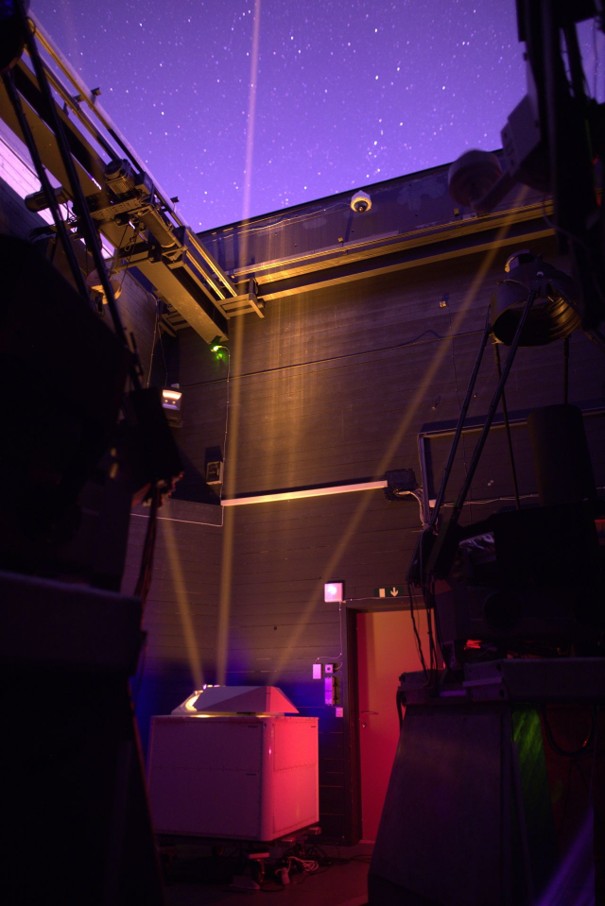
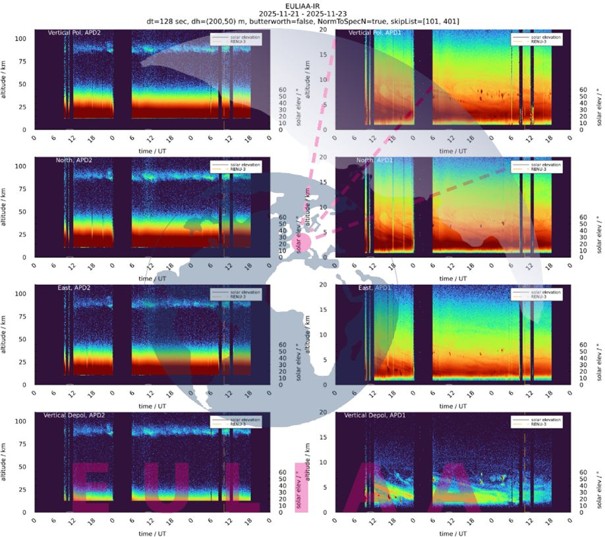
After more than four months of operation at Andøya Space, the first atmospheric lidar developed in EULIAA continues to run “business as usual”.
The mobile IR lidar has been measuring autonomously whenever Arctic winter weather allows, without any need for optical realignment or maintenance, while maintaining stable performance.
It retrieves wind and temperature in real time from aerosol scattering (up to ~25 km), molecular scattering (up to ~50 km) and metal layers (up to ~100 km), providing unique data to improve numerical weather prediction and climate monitoring.
23 March 2026 – EULIAA results at ESA Sustainability Workshop
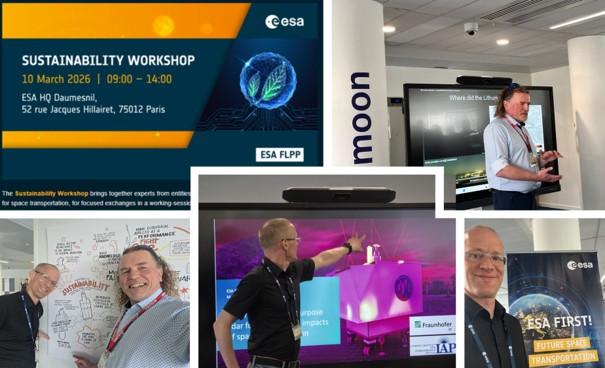
EULIAA partners from IAP and Fraunhofer ILT contributed to the ESA Sustainability Workshop at ESA HQ in Paris, focusing on sustainable space transportation.
They presented lidar measurements of rocket‑propellant aerosols throughout the atmosphere during a launch at Andøya Space, highlighting the largely unknown impacts of launch activities on the 70–100 km region and the ozone layer.
The same technology also has potential to detect material from burnt‑up space debris; ESA supports related work on Alexandrite lasers within an OSIP activity.
13 January 2026 – Media coverage on space debris and the atmosphere
The project shared a Tagesschau.de article in which Prof. Gerd Baumgarten (IAP) discusses how re‑entering space debris could affect the ozone layer and upper atmosphere.
The piece emphasises that particles released during re‑entry can interact with atmospheric processes and that this issue becomes more pressing as satellite numbers and launch rates grow.
Understanding these effects is essential for sustainable space operations and environmental responsibility, and aligns with EULIAA’s broader focus on upper‑atmosphere dynamics.
Weltraumschrott: Satelliten könnten Gefahr für die Erdatmosphäre werden | tagesschau.de
2 December 2025 – EarthCARE science and validation workshop in Tokyo
Andøya Space reported on participation in the EarthCARE science and validation workshop in Tokyo, where measurements from the ALOMAR observatory are used to validate ESA–JAXA EarthCARE satellite data.
While this activity is led by Andøya and partners, it demonstrates the broader ecosystem of atmospheric observations in which EULIAA lidar data can complement spaceborne cloud and aerosol measurements.
The workshop underscores the importance of coordinated satellite and ground‑based validation efforts for climate and radiation studies.

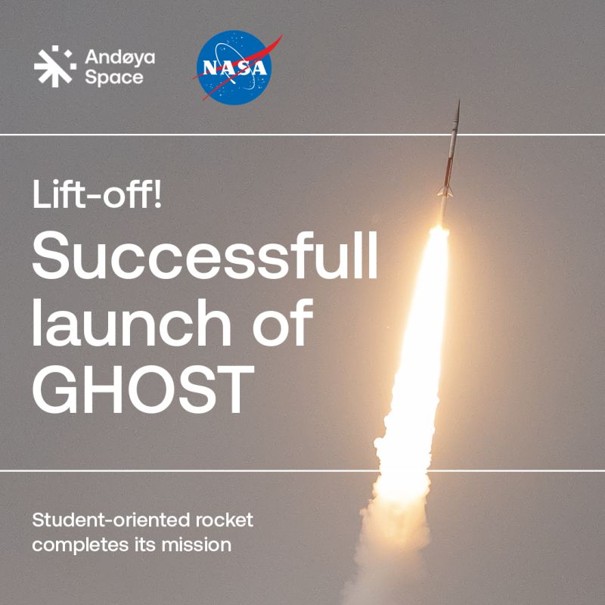
21 November 2025 – EULIAA lidar supports NASA GHOST launch at Andøya
During the NASA GHOST student mission launch from Andøya Space, the EULIAA atmospheric lidar system measured wind conditions from 3–30 km altitude right up to launch time.
This was one of the first operational tests at the beginning of the Andøya campaign and showed the potential of EULIAA data to support launch operations.
In the future, the system aims to provide real‑time wind information from ground up to ~100 km for ground control and mission safety.
11 November 2025 – First light and start of operations at ALOMAR (multi‑partner coverage)
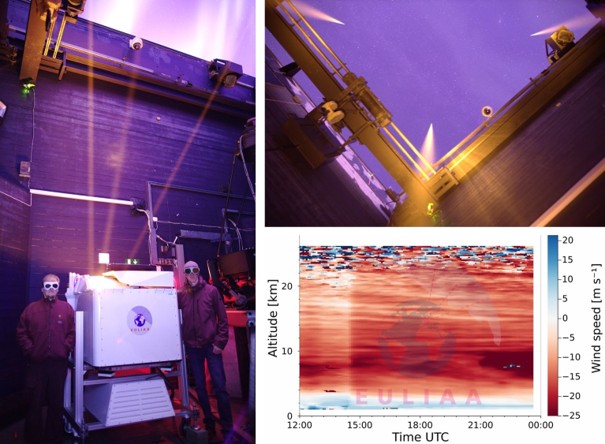
A major project milestone was reached with “first light” of the first EULIAA atmospheric lidar at the Arctic Lidar Observatory for Middle Atmospheric Research (ALOMAR), about 300 km north of the Arctic Circle.
Developed jointly by all partners over three years, the mobile system – powered by a custom Alexandrite laser from Fraunhofer ILT and high‑durability optics from Altechna – is installed in the ALOMAR telescope hall and measures in three directions (vertical and two tilted beams) both day and night, including during aurora.
Initial wind measurements up to >20 km were successful, and now full‑scale, autonomous, multi‑angle operation has begun as the first station in a Europe‑wide validation campaign, with data planned for near‑real‑time delivery to climate and weather databases.
4 November 2025 – Installation of EULIAA lidar completed at ALOMAR
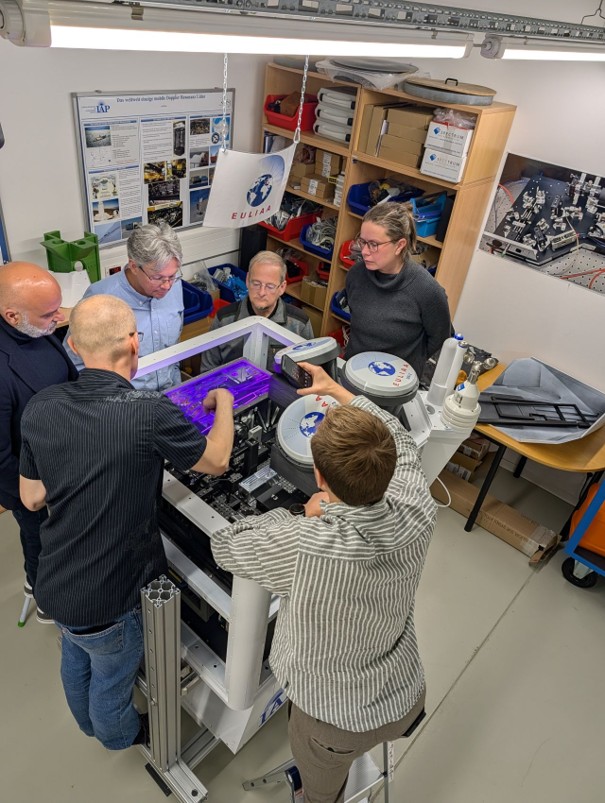
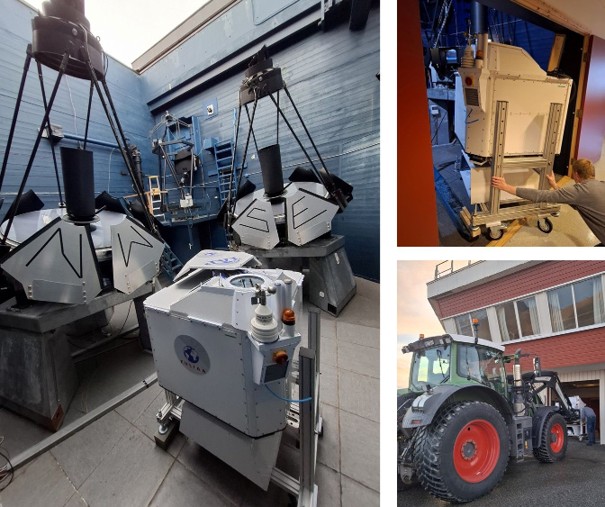
Within a very short time, the EULIAA team from several partner institutions set up, tested and integrated the innovative atmospheric lidar system at the ALOMAR observatory.
All subsystems are now operational, the lidar is aligned within the telescope hall, and final integration work has been completed.
The team prepared the system for its first atmospheric measurements, marking the transition from lab to full Arctic deployment.
30 October 2025 – First EULIAA lidar transported from Germany to Andøya
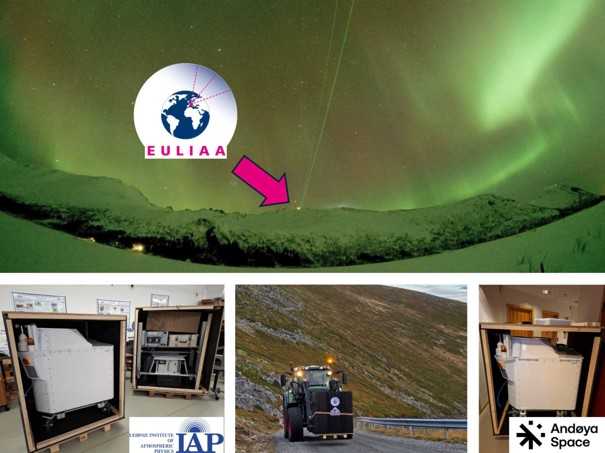
The first novel atmospheric lidar system of the EULIAA project was transported from IAP in Germany to Andøya Space in Norway.
At the ALOMAR observatory, this system initiates a pan‑European validation campaign under demanding environmental conditions, testing portability and robustness.
The close cooperation between Andøya Space and IAP teams during transport and on‑site setup demonstrated that such a complex, highly sensitive instrument can be moved 3,000 km and re‑deployed successfully.
24 September 2025 – EULIAA lidar technology presented at DLRK
At the German Aerospace Congress (DLRK) of DGLR, Fraunhofer ILT presented EULIAA’s atmospheric lidar systems and their potential applications.
Beyond providing wind and temperature data for meteorological models, the talk explored a wide range of additional use cases for the technology.
Feedback from the aerospace community offered valuable input for further development and potential future collaborations.
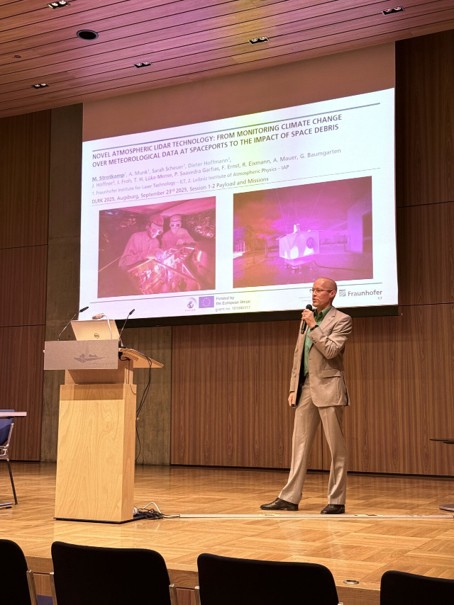
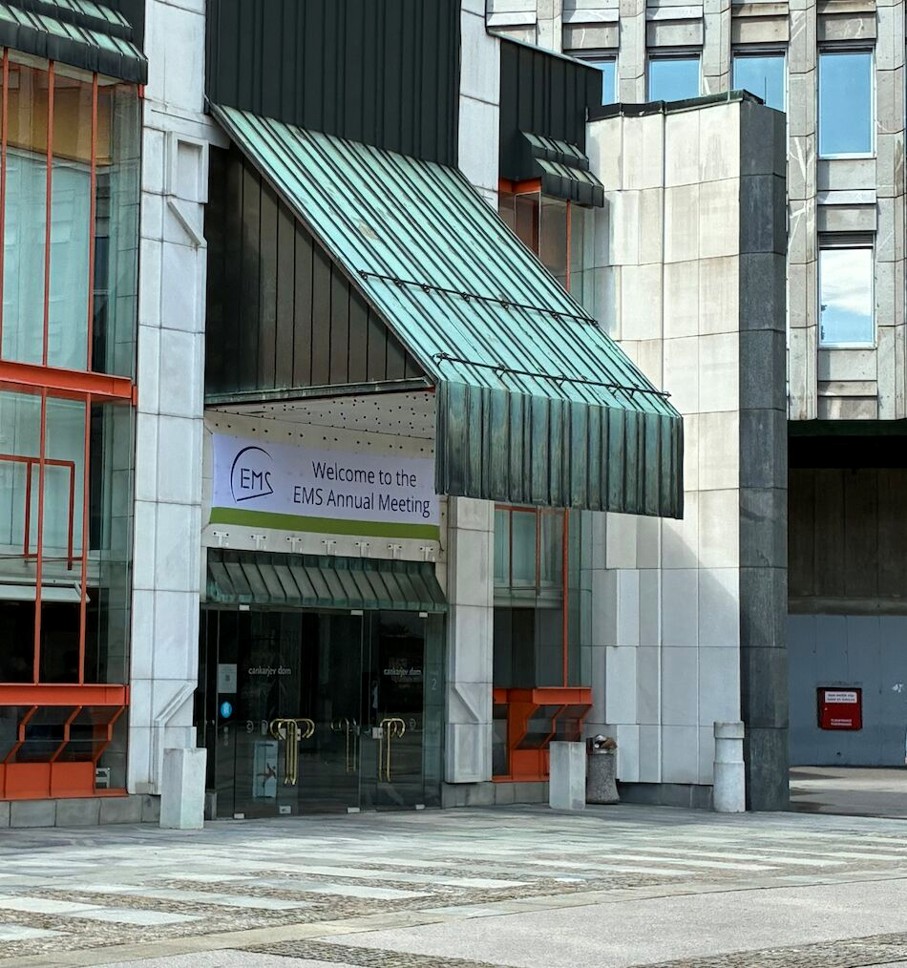
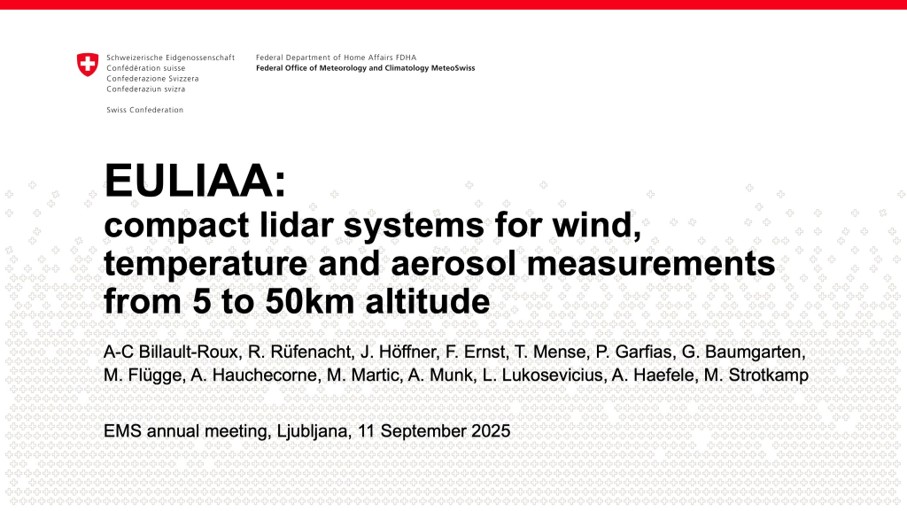
18 September 2025 – EULIAA at EMS 2025 Annual Meeting in Ljubljana
The EULIAA project was presented at the European Meteorological Society (EMS) 2025 Annual Meeting in Ljubljana.
Participants from European weather services showed strong interest in the novel technology for high‑resolution, high‑accuracy profiles of wind, temperature and aerosols from 5 to 50 km altitude.
The event helped to build anticipation for upcoming field campaigns and data releases.
23 August 2025 – First comparative campaign with HALO research aircraft (HALO‑South)
EULIAA’s novel atmospheric lidar system took part in a first comparative measurement campaign with the HALO research aircraft during the HALO‑South mission.
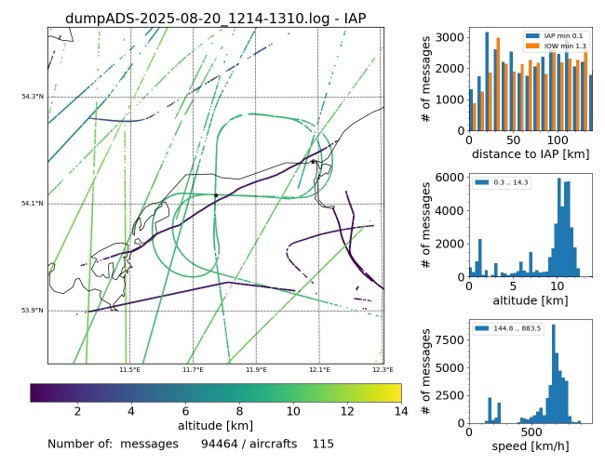
On 20 August 2025, HALO overflew IAP Kühlungsborn while EULIAA lidars and radars operated from the ground, enabling combined airborne and ground‑based observations of atmospheric dynamics and aerosols.
Despite vacation season, the team rapidly prepared the instruments; the resulting dataset will be used to verify lidar performance and to obtain a multi‑dimensional view of atmospheric processes.
30 August 2025 – Partner Altechna on customised optics for demanding environments
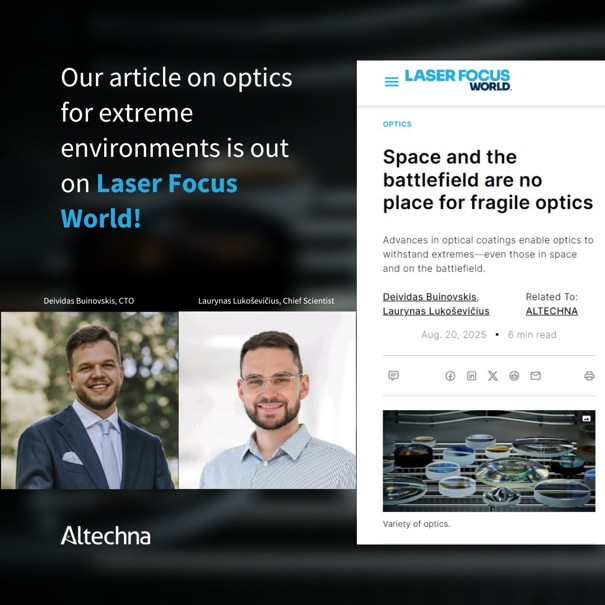
Altechna published a broader reflection on the optics industry’s shift towards highly customised components designed for specific environments, such as high‑vibration platforms or extreme temperatures.
The company’s expertise in phase‑control optics, ultra‑low‑absorption CW laser coatings and robust optomechanical assemblies underpins several elements used in EULIAA’s lidar systems.
This development illustrates how advances in custom optics directly benefit ambitious research infrastructures like EULIAA.
~June 2025 – First complete EULIAA lidar system and initial atmospheric tests at IAP
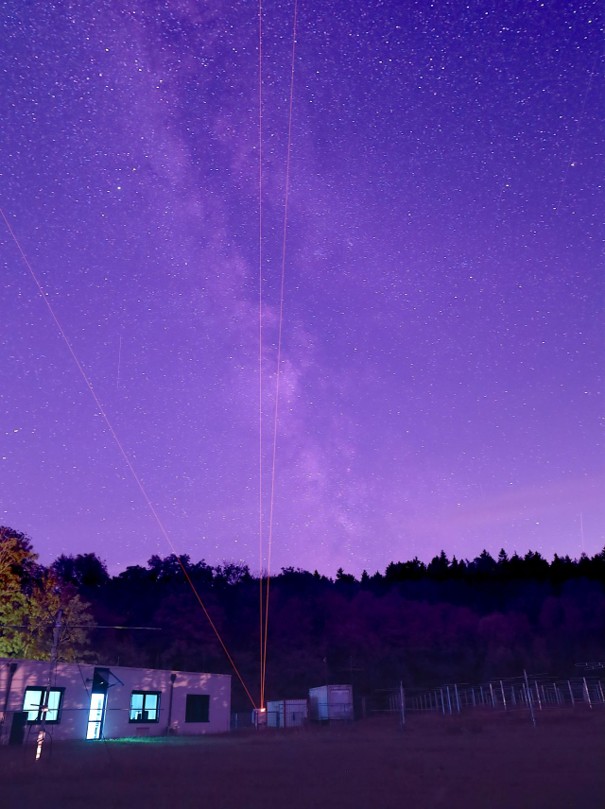
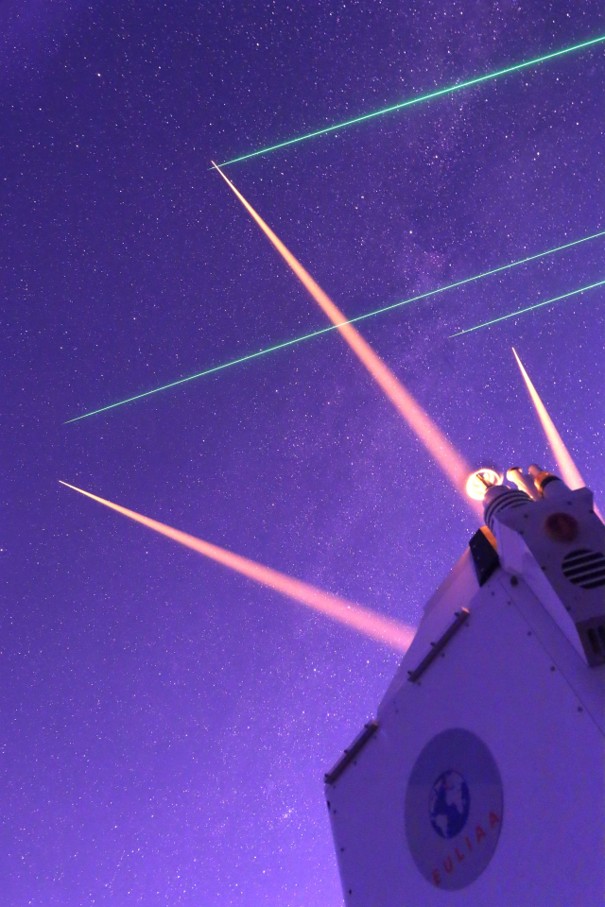
The first complete atmospheric lidar unit developed within EULIAA, operating in the infrared, has been fully assembled, commissioned and successfully tested at the Leibniz Institute of Atmospheric Physics (IAP).
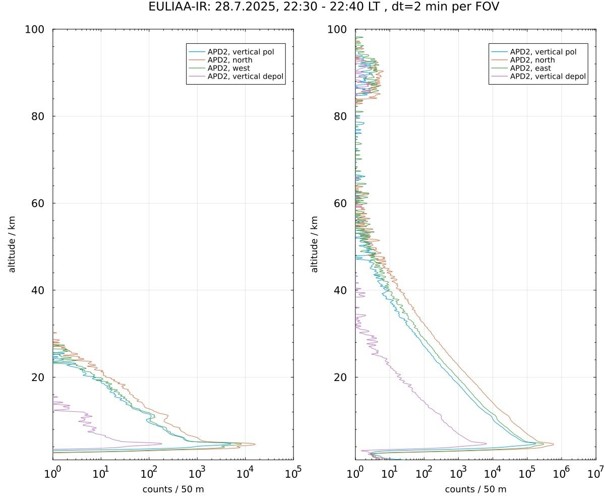
All subsystems – including the diode‑pumped Alexandrite IR laser, control software and safety systems – were integrated into the mobile housing, and the system was moved outside to the testing range. Initial atmospheric measurements demonstrated:
- operation with three tilted fields of view plus an additional depolarisation channel,
- high‑quality signals from aerosols (Mie scattering) up to about 30 km and from air molecules (Rayleigh scattering) up to about 50 km, and
- signatures from metal layers at around 85–95 km altitude.
These first results confirm that the IR lidar unit meets its design goals and is ready for long‑term testing and subsequent deployment to remote campaign sites within the EULIAA network.
June 2025 – First EULIAA UV laser delivered from Fraunhofer ILT to Leibniz IAP
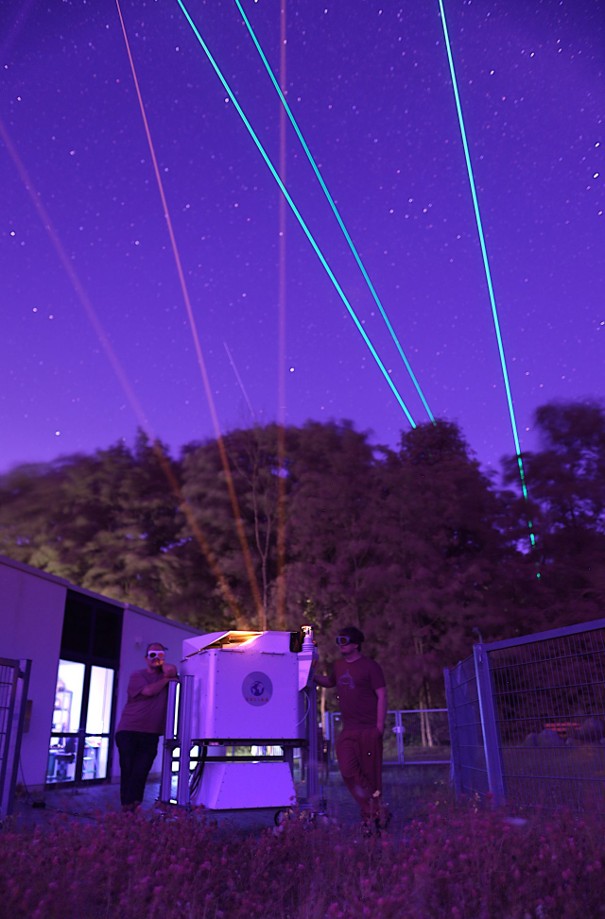
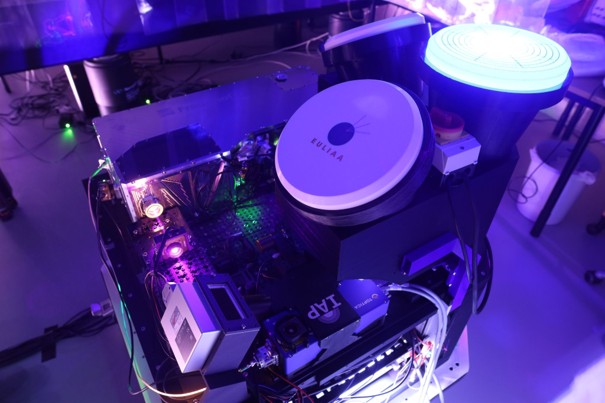
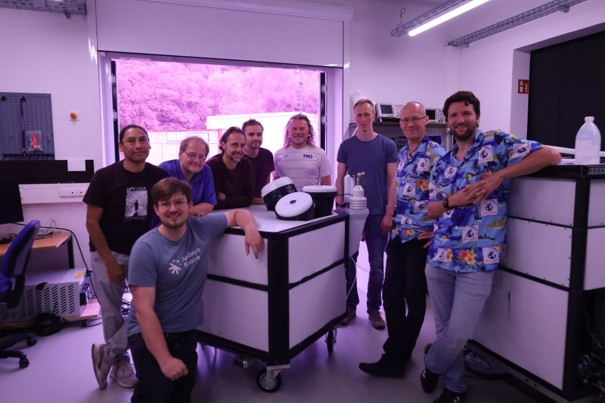
Fraunhofer ILT has delivered the first prototype of a diode‑pumped Alexandrite UV laser for the EULIAA project to the Leibniz Institute of Atmospheric Physics (IAP) in Kühlungsborn.
The laser operates in single‑frequency mode at 386 nm with pulse energies up to 2.5 mJ at 750 Hz and has been designed specifically for use in the EULIAA UV lidar system.
After delivery, the laser was integrated into the dedicated lidar setup at IAP. This marks a key step towards a fully operational UV lidar unit that will extend EULIAA’s measurement capabilities into the ultraviolet spectral range and support future high‑altitude profiling campaigns across Europe.
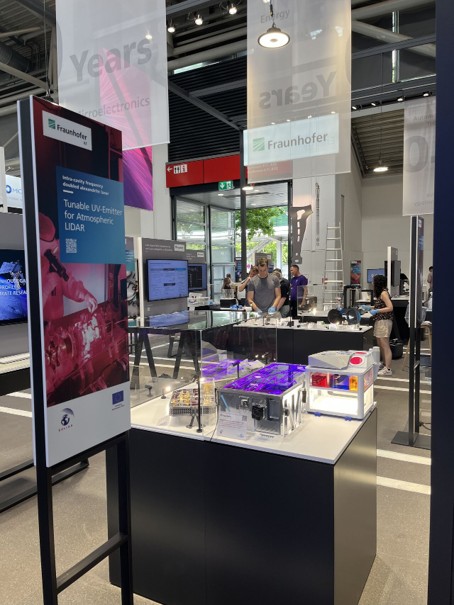
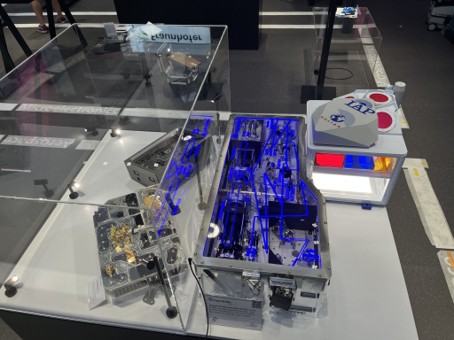
June 2025 – EULIAA UV laser demonstrated at Laser World of Photonics, Munich
At Laser World of Photonics in Munich, Fraunhofer ILT presented a prototype of the tunable UV laser developed in the EULIAA project:
- The laser was showcased at the main Fraunhofer booth (A3.431), alongside other photonics innovations.
- Visitors were invited to learn about its role in atmospheric lidar systems for high‑altitude wind and temperature measurements.
Several posts documented the preparation, booth setup and live demonstrations, highlighting strong interest from the photonics community in EULIAA’s laser technology.
June 2025 – EULIAA partners at DACH 2025 conference in Bern
EULIAA partners MeteoSwiss and IAP participated in the D·A·CH 2025 conference in Bern, hosted by the Oeschger Centre for Climate Change Research, University of Bern.
The conference brings together experts from academia, industry and administration across all fields of weather and climate.
At this high‑profile meeting, EULIAA partners presented project status and early results, introducing the novel lidar technology for high‑resolution profiles of wind, temperature and aerosols and discussing its relevance for operational meteorological services in the DACH region.

June 2025 – EULIAA lidar capabilities highlighted at ESA Zero Debris Week
Gerd Baumgarten (Leibniz Institute of Atmospheric Physics, IAP) represented the EULIAA project at ESA’s Zero Debris Week, organised by ESA Space Safety at ESOC. The event brought together launcher companies, operators, agencies, NGOs and academia to advance the “Zero Debris” agenda and the next edition of the Zero Debris Technical Booklet.
At the meeting, EULIAA’s lidar technology was presented as a tool capable of detecting residues of burnt‑up space debris in the upper atmosphere. While the environmental impact of re‑entering debris is gaining attention, it is still not widely considered in the broader community. EULIAA’s contribution helped raise awareness of this issue and demonstrated how advanced atmospheric lidar measurements can support a more sustainable use of space.
September 2024 – EULIAA project review meeting hosted at Fraunhofer ILT
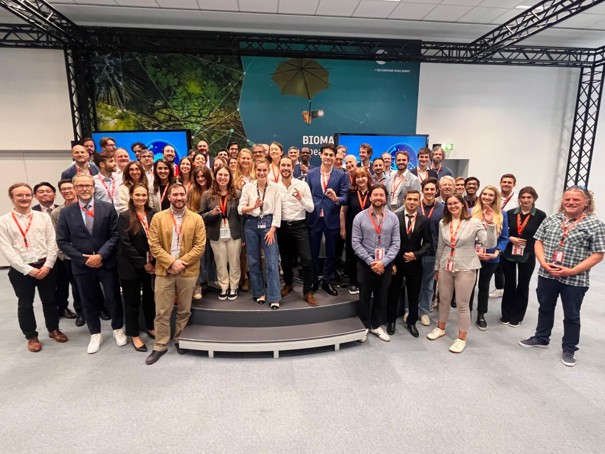
The EULIAA consortium held a project review meeting at Fraunhofer ILT in Aachen, Germany, with additional participants joining online.
EULIAA, funded by the European Commission, aims to develop and demonstrate an advanced atmospheric lidar to provide key data for monitoring climate change.
During the meeting, partners presented substantial progress and results across lidar system design, laser development, optical coatings and data processing. Despite very ambitious goals, the project remains on track and has even revealed additional potential beyond the original plans – including a clear prospect of achieving “first light” with the new lidar at the beginning of the following year.
The consortium expressed its thanks for the strong efforts of all partners and the valuable guidance from Advisory Board members Frank Lison, Bernhard Stein and Jens Löhring, as well as project officer Lara Congiu and reviewers David Riaño and Peter North.
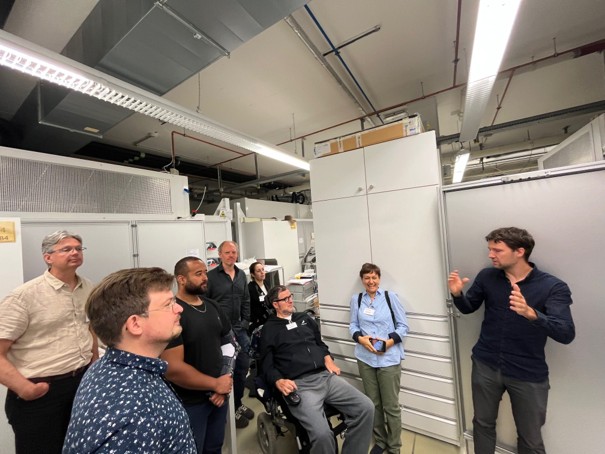
1 January 2023 – EULIAA Kickoff Meeting in Aachen
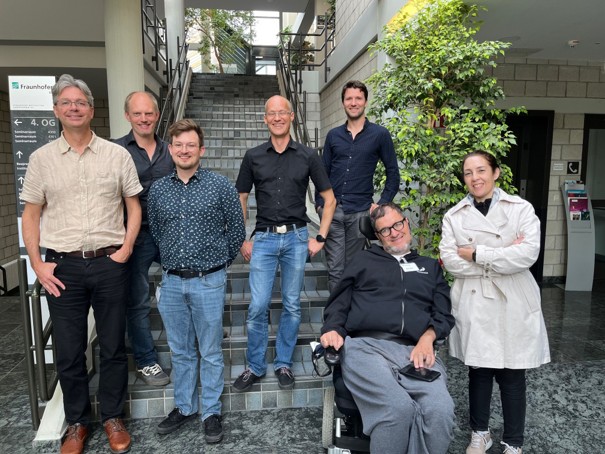
This year we started our new EU-funded project EULIAA: European Lidar Array for Atmospheric Climate Monitoring with our hybrid kickoff meeting online and in Aachen.
Within the project the partners Fraunhofer Institute for Laser Technology ILT, Leibniz-Institut für Atmosphärenphysik IAP, Altechna, Andøya Space, Bundesamt für Meteorologie und Klimatologie MeteoSchweiz, LATMOS Laboratoire Atmosphères, Observations Spatiales and GordienStrato will develop novel mobile ground-based lidar systems that can operate in an array over large areas, demonstrate the performance in extensive field campaigns all over Europe and feed the atmospheric data in near real-time in the European database like COPERNICUS and GEOSS.
We are a great consortium with many experts in all the relevant fields and eager to approach the challenge of such an ambitious technology. We are thankful to the European Commission for their trust in us and the opportunity to push the development for closing gaps in environmental data to monitor climate change.
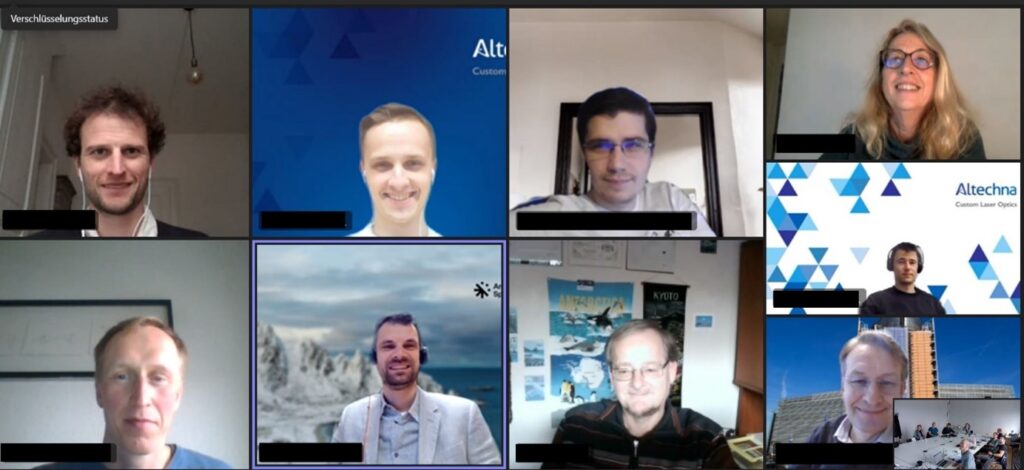
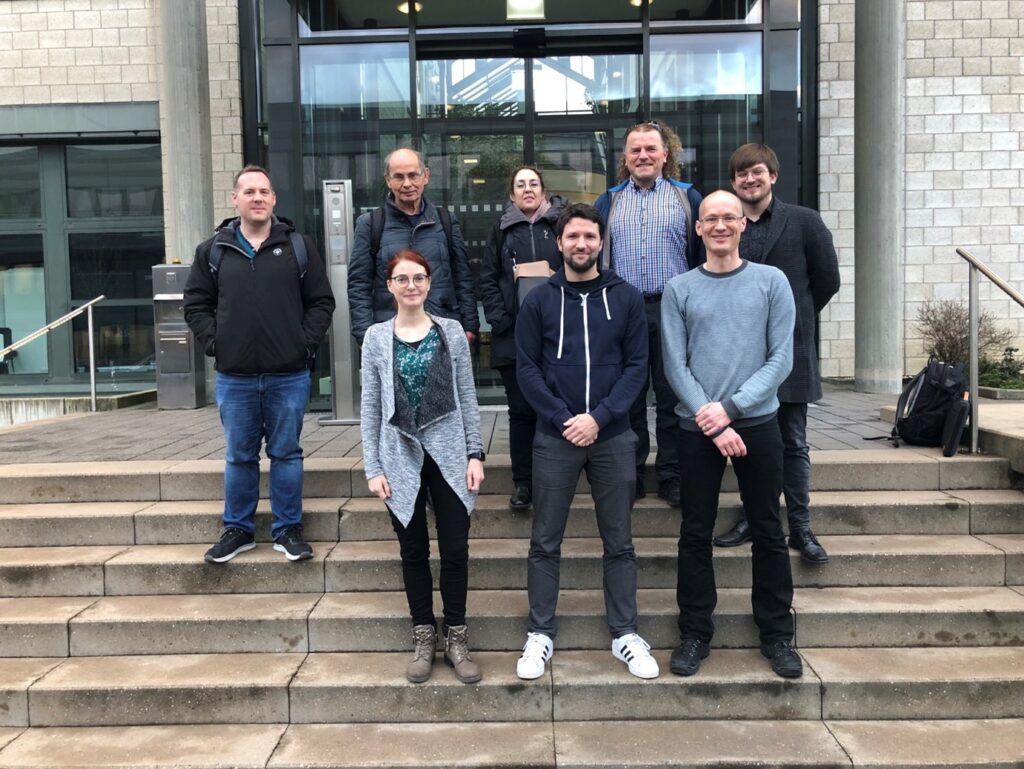
Participating experts of the hybrid kickoff meeting - online and in Aachen.