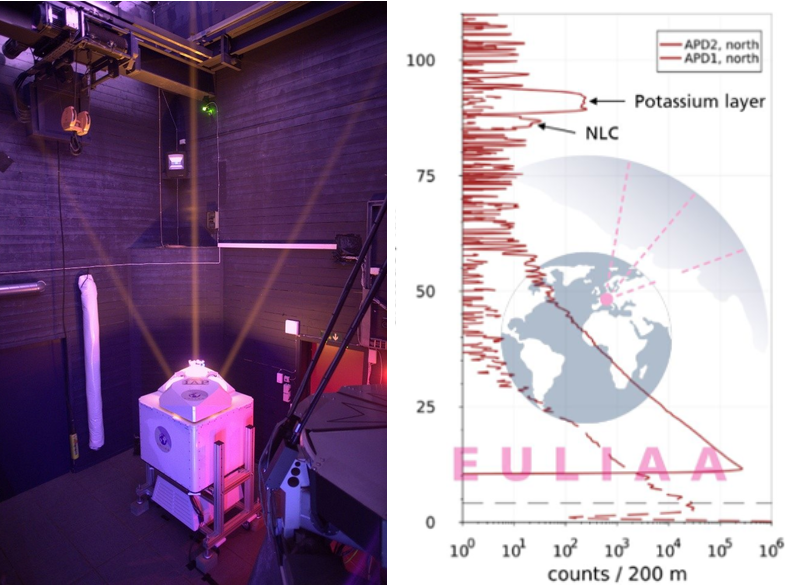
Our first EULIAA lidar, operating at Andøya Space since more than half a year, caught something new:
With the now starting season, the lidar measured its first Noctilucent Cloud (NLC), also called Polar Mesospheric Cloud (PMC), in altitude of 80-90 km. As the name suggests, they usually only appear in polar regions but with the increasing climate change they can be seen in more southern latitudes. So, they can be a potential tracer for monitoring of the climate change if the understanding of their formation and the necessary conditions improves. Our EULIAA lidars can contribute with its data from otherwise inaccessible altitudes.
Author: gabriele.fort-wydera@ilt.fraunhofer.de
EULIAA IR lidar tracks rocket emissions at ESA symposium
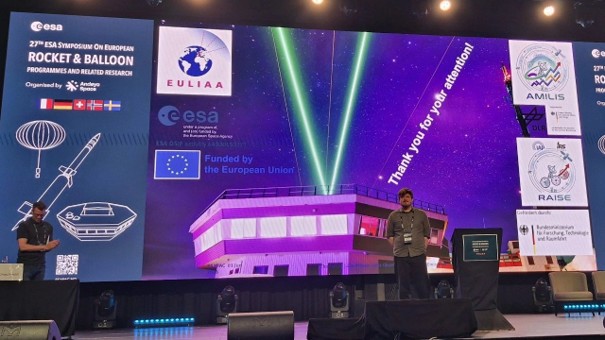
At the ESA Symposium on European Rocket and Balloon Programmes and Related Research in Trondheim, Thorben H. Lüke‑Mense (Leibniz Institute of Atmospheric Physics, IAP) presented first results from the EULIAA infrared lidar at the ALOMAR observatory in Northern Norway.
The system, operating autonomously at Andøya Space since October 2025, successfully measured aerosols from a sounding rocket exhaust throughout the atmosphere during launch.
These measurements, although not the primary project objective, demonstrate the strong potential of EULIAA lidar technology for monitoring spaceflight emissions and have already triggered discussions with stakeholders from the space transportation community.
Preparations for Jungfraujoch high‑altitude UV‑lidar campaign
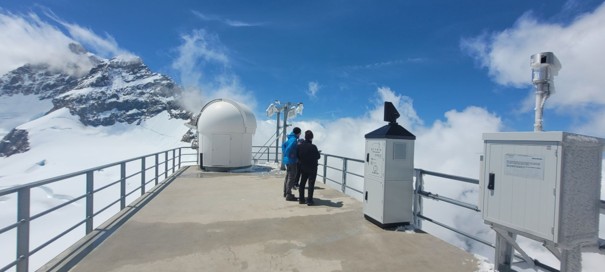
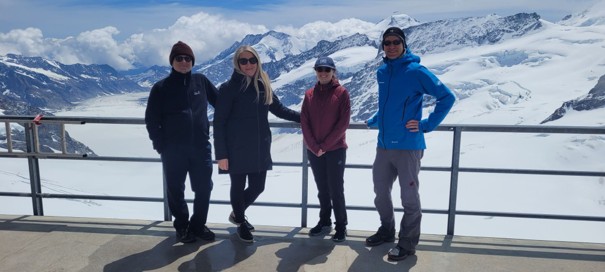
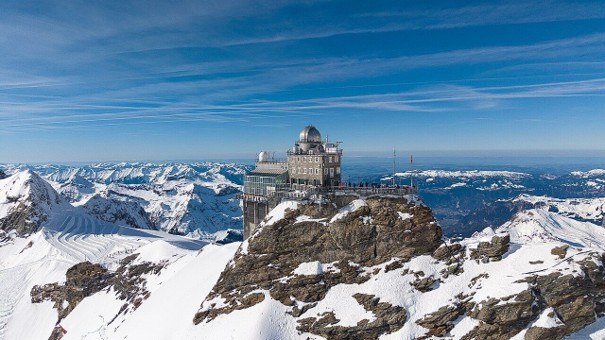
The next major campaign for EULIAA’s atmospheric lidar is scheduled to start in early July 2026 at the Sphinx Observatory on Jungfraujoch (3,571 m a.s.l.) in Switzerland.
Partners from MeteoSwiss, IAP and Fraunhofer ILT visited the site to plan logistics, access and installation on the Meteo Terrace, where the second UV lidar will operate for about three months under extreme conditions (hoarfrost, snow, wind gusts up to 250 km/h and very low temperatures).
Demonstrating fully autonomous operation at this remote, high‑altitude station will be an important proof of the high technological readiness level (TRL) of the EULIAA lidar systems and a step towards future dual‑site measurements (e.g. MeteoSwiss Payerne + Jungfraujoch) as a first lidar array.
EULIAA at EGU2026: Townhall TM6 and project results
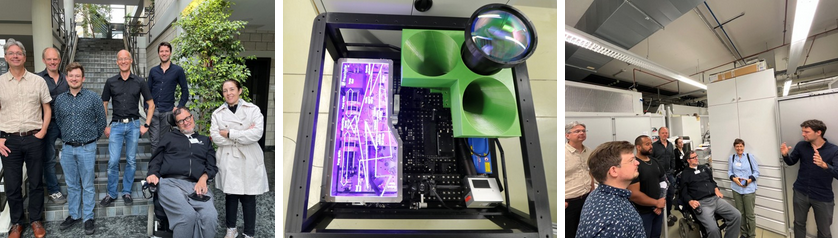
At EGU2026 in Vienna, EULIAA partners were active throughout the week:
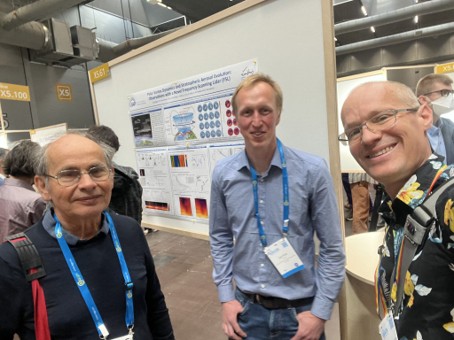
- On the first conference day, several posters presented results from lidar development, deployment and data management, which attracted considerable interest from the geoscience community.
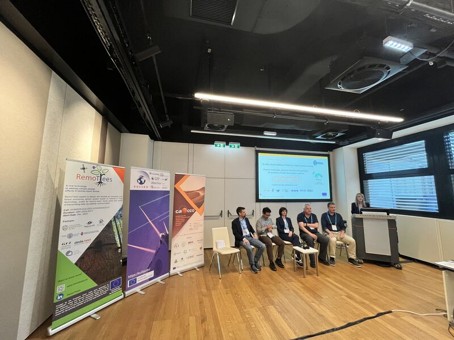
- EULIAA then co‑organised Townhall TM6 “Exploring remote sensing and in‑situ observations in hard‑to‑reach areas: Challenges and opportunities for understanding climate change impacts”, together with the DEAL cluster and projects such as CiROCCO, UAWOS, TEMBO Africa, MISO, SYLVAN and RemoTrees.
- During the Townhall, EULIAA highlighted two complementary aspects of “hard‑to‑reach environments”:
- harsh deployment sites for ground‑based lidars (Northern Norway, Southern France, high‑altitude mountain stations), and
- measurements of wind, aerosols and temperature up to 50 km and above, in altitude regions that are otherwise inaccessible.
The discussions showed that many groups – using very different instruments – face similar challenges and are willing to share best practices. EULIAA thanks CiROCCO for leading the organisation and Chrysoula Papathanasiou for moderating the event.
Second Periodic Review Meeting at IAP
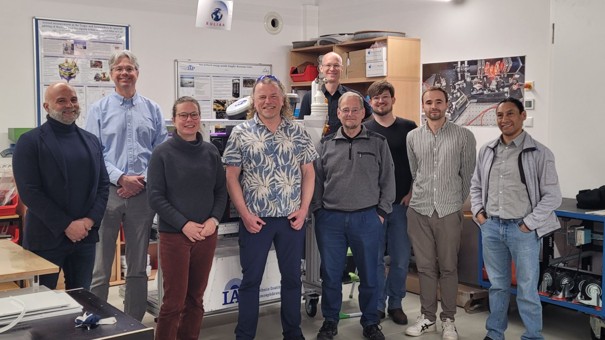
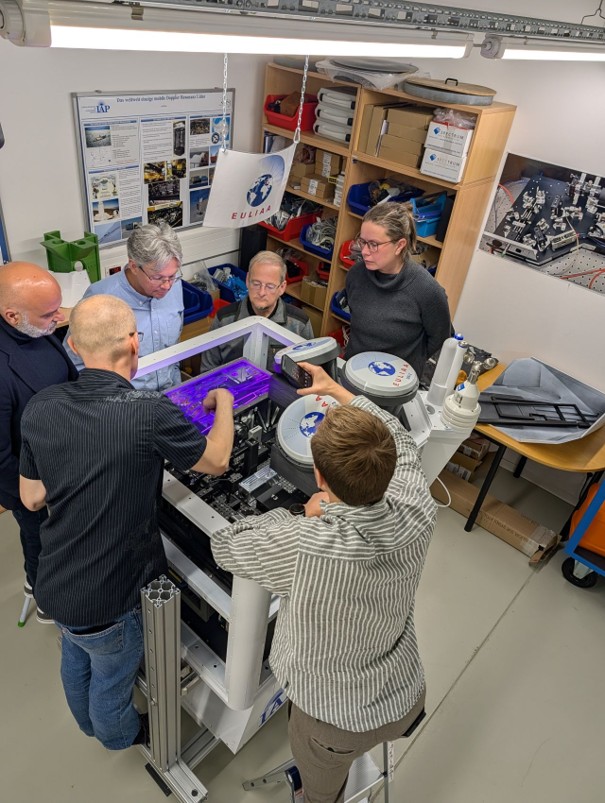
The second Periodic Review Meeting of the EULIAA project took place at the premises of the Leibniz Institute of Atmospheric Physics (IAP).
The consortium presented the progress achieved in the first three project years, including the deployment of the first two atmospheric lidars to Northern Norway and Southern France and preparations for a third system to be deployed in Switzerland.
EULIAA partners thanked Advisory Board members Jens Löhring (ESA) and Magnus Lindskog (ECMWF), the reviewers Peter North and Simone Lolli, and project officer Lara Congiu for their constructive feedback for the final project phase.